Whole, Holy, Wealth, and Health
and remembering what you are made of
These four words sit at the epicenter of everything humans hold dear. From an etymological perspective, they all have the same roots.
The Old English word hal, from which we get health, whole, and holy, carried all three meanings in one syllable. In Latin, the word salus meant health, but was also the word for wealth. The same roots that described physical flourishing, described spiritual wholeness, and material abundance. A single condition, not separate categories.
Somewhere in the last few centuries, the root got severed. Wealth - went in the direction of accumulation. Health - went towards the absence of disease. And holy - got sequestered into Sunday mornings or anything considered “woo,” and was quietly removed from daily life. Each part developed its own industry and set of metrics. The result is that we now have entire systems dedicated to the optimization of each fragment and almost no language for the whole.
We can measure productivity. We can measure protein intake. We can measure sleep. Yet we have very little to offer the person who feels, despite all the metrics trending in the right direction, fundamentally incomplete.
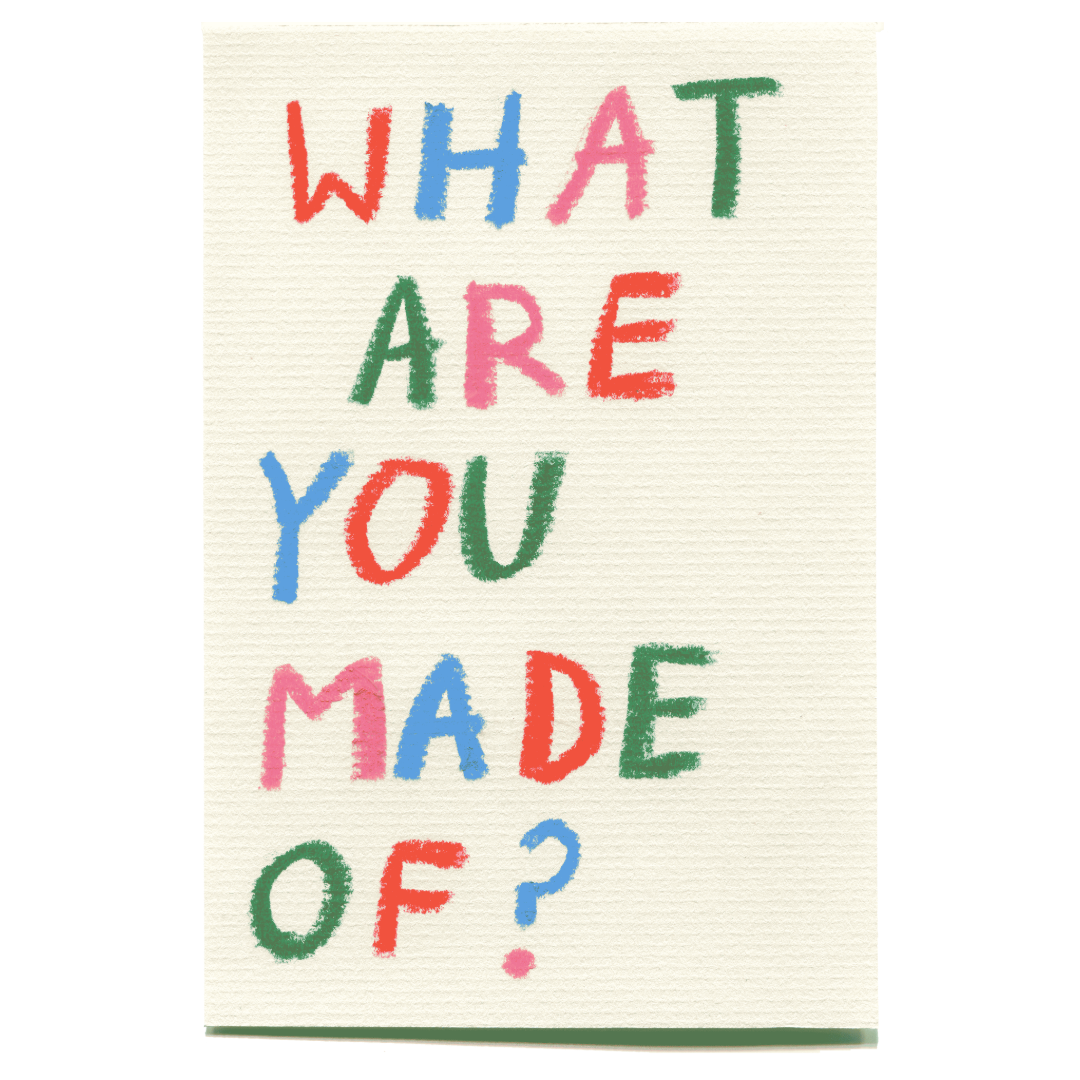
If this resonates, we’ll be teaching an online class in July called “What are you made of?”. It’s an invitation to explore what our lives and the systems around us might look like if we returned to the root.
With endless fragmentation over the last hundred years, something’s happened to the way we understand ourselves. It began with industrialization and the production of mass markets, accelerated through the twentieth century, and is now deeply embedded in the collective consciousness: the transformation of active citizens into passive consumers.
When you look at the architecture of what’s unfolded, it’s quite impressive, if you can stomach admiring it. You create a void and convince people it's real. Instead of inviting them to actively move through it, you sell them things to fill it. External objects can never fill an internal void, so the void goes perpetually and profitably unfilled.
The genius of this system is that it doesn't feel like a system. It feels like personal inadequacy. It feels like waking up and noticing you're not quite enough - not skinny enough, not successful enough, not calm enough, not productive enough - and then, reasonably, going in search of whatever will make you enough. The search is so normalized that questioning it reads as naive. Of course, you should want more. Of course, you should be improving. Of course, there is a better version of yourself available if you just do the work.
But the void is a construct. Not that the hunger isn't real…it is real, it is felt in the body, it’s here to grow our lives, but the hunger has been misdirected. It points outward, toward acquisition and achievement, and the management of other people's perceptions, when what we are actually reaching for has always been inward.
Over the course of four weeks, we’ll explore how this void shapes our lives individually and societally. It will lead us to sit with the question: if we no longer need anything, if everything we are longing for is actually innate, then what do we want? And then who do we have a chance to become, individually and together?
If you are looking at life right now and thinking, there must be a better way, or where do we go from here?
The answers are already in you and me, they are in your neighbor and your co-worker, in your grandma and your niece. Both individual and collective wholeness are innate, by design. If we can just remember.
Excerpts from this email are from an upcoming essay called Tending the Soil, debuting as part of our new exhibit, The Whole World Wiggles.