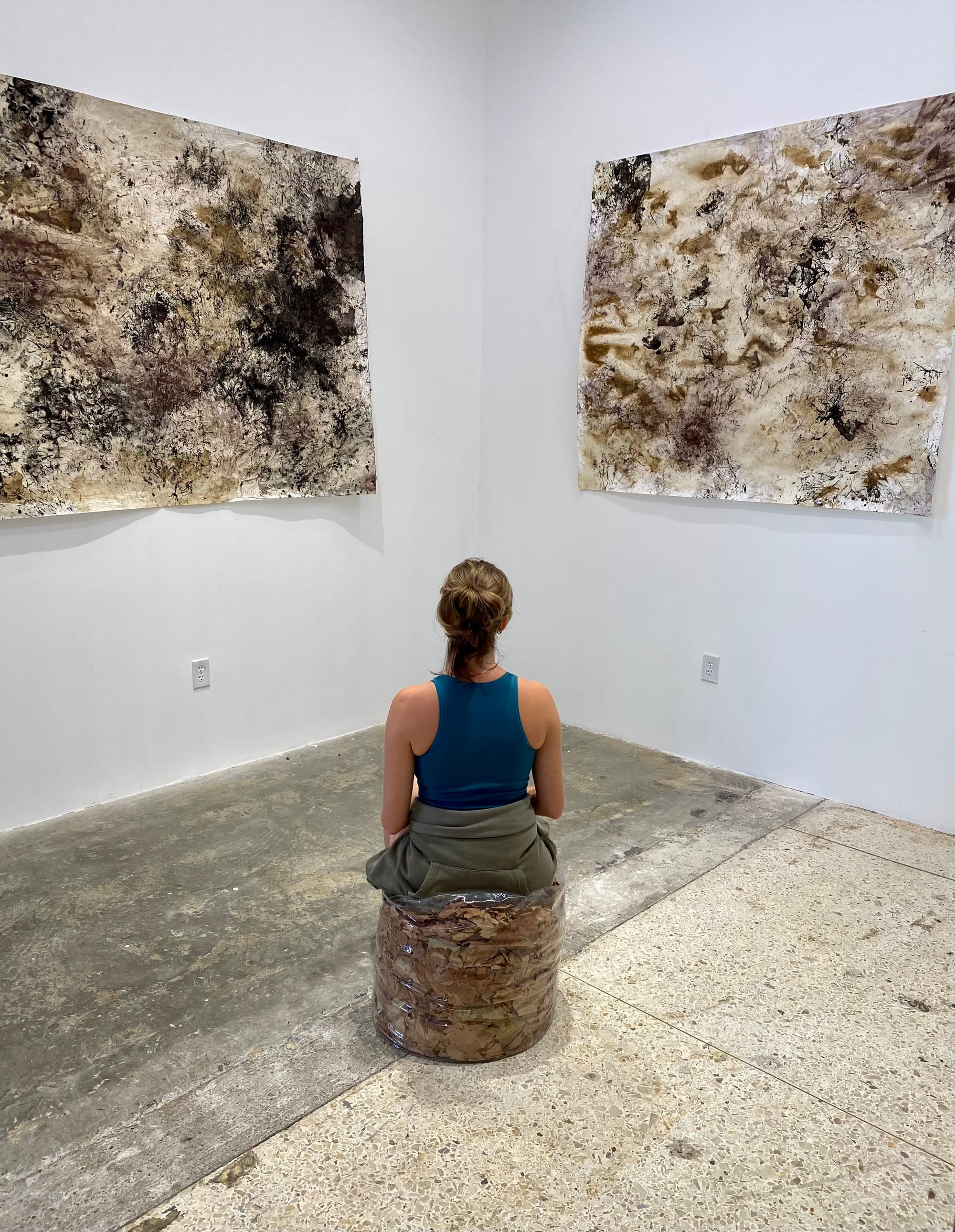
The Resilience of the In-Between by Sara Dotterer
On ecotones, eco-interoception, and what nature keeps trying to teach us (and we keep ignoring)
An ecotone is an ecological term for the overlapping area where two ecosystems meet and integrate. A lake and a mountain region. A forest and a meadow. Anyone who knows me knows I’m obsessed with ecotones.
These "blurry" areas are extremely biodiverse and thus... resilient. They hold up and balance our ecosystems. They're zones of mixing where life actually increases.
I form ecotones with the world around me. This has been my orientation for as long as I can remember: living between disciplines, between rigidity and flow, between what's inside the body and what surrounds it. The ecotone is a lens I use to deconstruct either-or thinking and pull from the resilience of in-between thinking. The most alive spaces are the ones that allow exchange. But it’s not like they have NO structure. It’s just a porous structure.
–
During my MFA in 2021-2023, I developed a practice I call “eco-interoception.”
Interoception is a common term in science that describes the perception of what's happening inside the body: physical sensations, emotional states, the internal signals we're often taught to ignore. Eco-interoception extends this by using external ecological patterns to understand internal ones. Mycelium networks to understand neural pathways. Branching fractals to visualize blood vessels. Tree cycles to make sense of my own seasons of decay and regrowth.
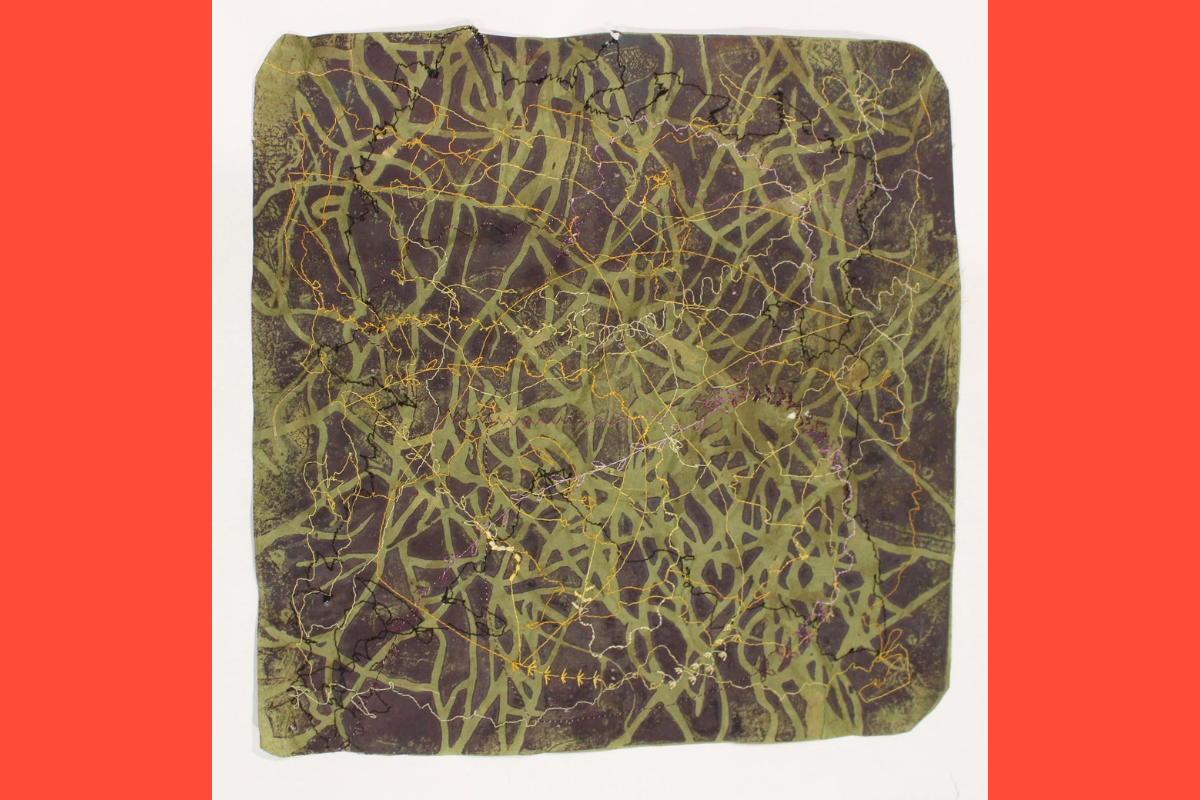
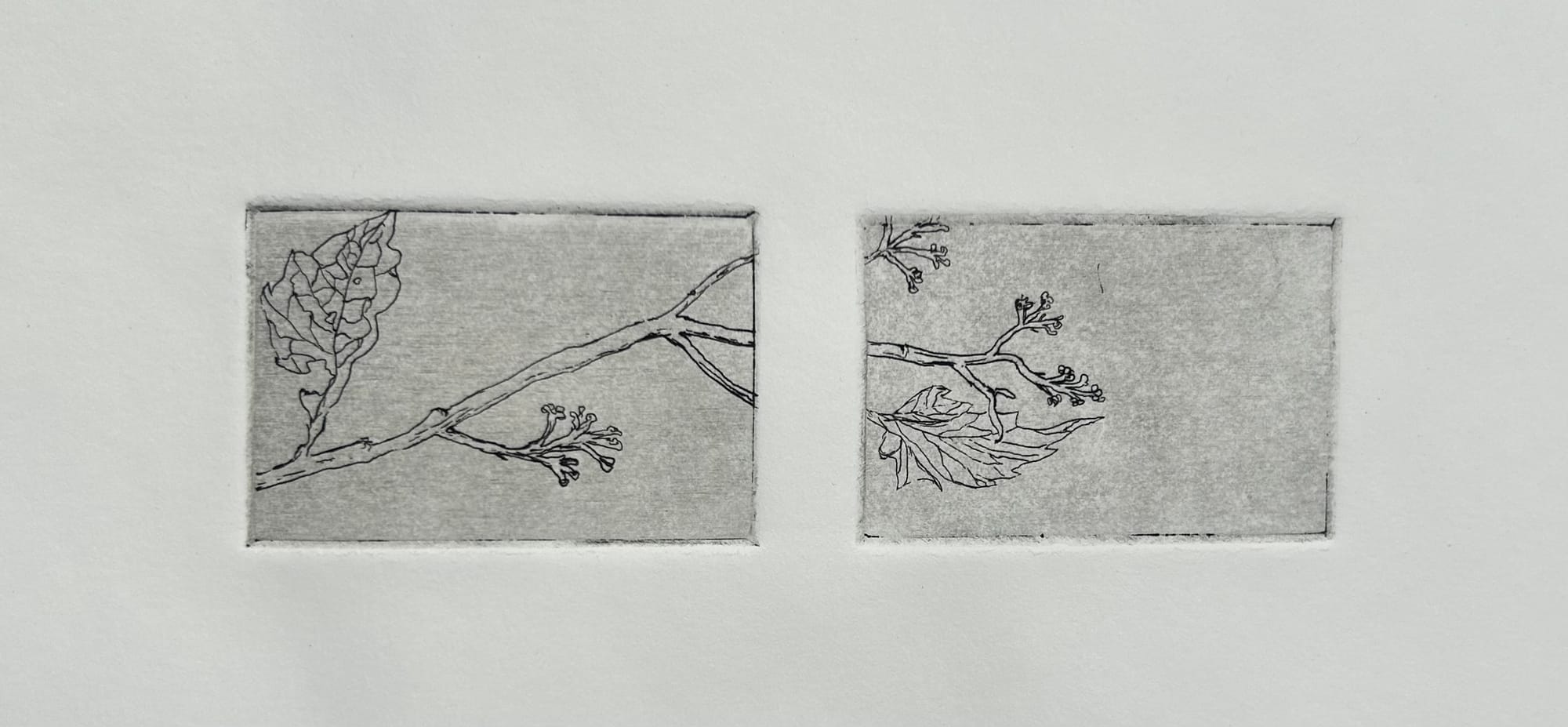
Halfway through my degree (concurrent with the pandemic) I found myself walking the streets of New York, endlessly fascinated with the fractal patterns of wintering trees. The branches reached upward and outward in the same patterns as the blood vessels in my body. The neurons in my brain. I started drawing these rhizomatic structures obsessively. Ink on paper. Fabric printed with mycelium and neural patterns. Virtual reality environments where I could walk inside the branching.
It's both anthropomorphic — projecting other species' patterns onto myself to understand my own body — and anti-anthropomorphic — striving to decenter my human-ness by exploring ways of being beyond human intelligence.
What I didn't understand then was that my depressed brain was sort of like a wintering tree – less full of connections and new branching systems. Around that same time, I began ketamine treatment for depression. A doctor described the effect of ketamine on the brain as making neurons look like "a tree in spring" versus "a tree in winter."
My art practice was actually emulating the process of neurogenesis (building up neural connectivity) through line-making... before I had the clinical language for any of it. My art therapist would be happy to point out that the body was choosing its own medicine through materials.
–
In 80-Year-Old Oak in Two and a Half Minutes, I simulate an 80-year-old oak tree growing as it would in an urban nature ecotone: that transitional zone where city and forest overlap. The video compresses eight decades of growth into moments as you see the tree merge into the fence that surrounds it.
Technology lets us watch evolution happen fast. But that's the illusion! A tree doesn't rush its becoming. It loses leaves without fear. It grows toward light without a timeline. What looks like stillness is actually constant, invisible work: roots reaching, cells dividing, mycelium networking beneath the surface.
We're living in a culture that wants transformation at the speed of a scroll. But evolution doesn't work that way. To evolve is to let the old die without rushing its pace. To trust the process that's been unfolding for 200 million years.
–
I have also tried to collaborate with slime molds (physarum polycephalum) to design the layout of an exhibition. I wanted the organisms to find the most efficient pathways for visitors to walk through the space. This is what they do when you place multiple food sources on a petri dish – they find the best path to get to their nutrients.
The partnership failed. Because... they (other species) do what they want.
This became its own lesson. Respecting other species' timescales and agency versus using them for human needs. The slime mold taught me that I cannot force emergence. I can only create conditions and then pay attention.
There's a line in my Inner Architecture by Lori that says: Your quest for weaving connections is boundless, like a slime mold unfolding in its own direction, in its own time… the more diverse the experiences and disciplines you find yourself in, the more at home you are. For some, this might feel like chaos. For you it provides clarity, healing, and vitality.
–
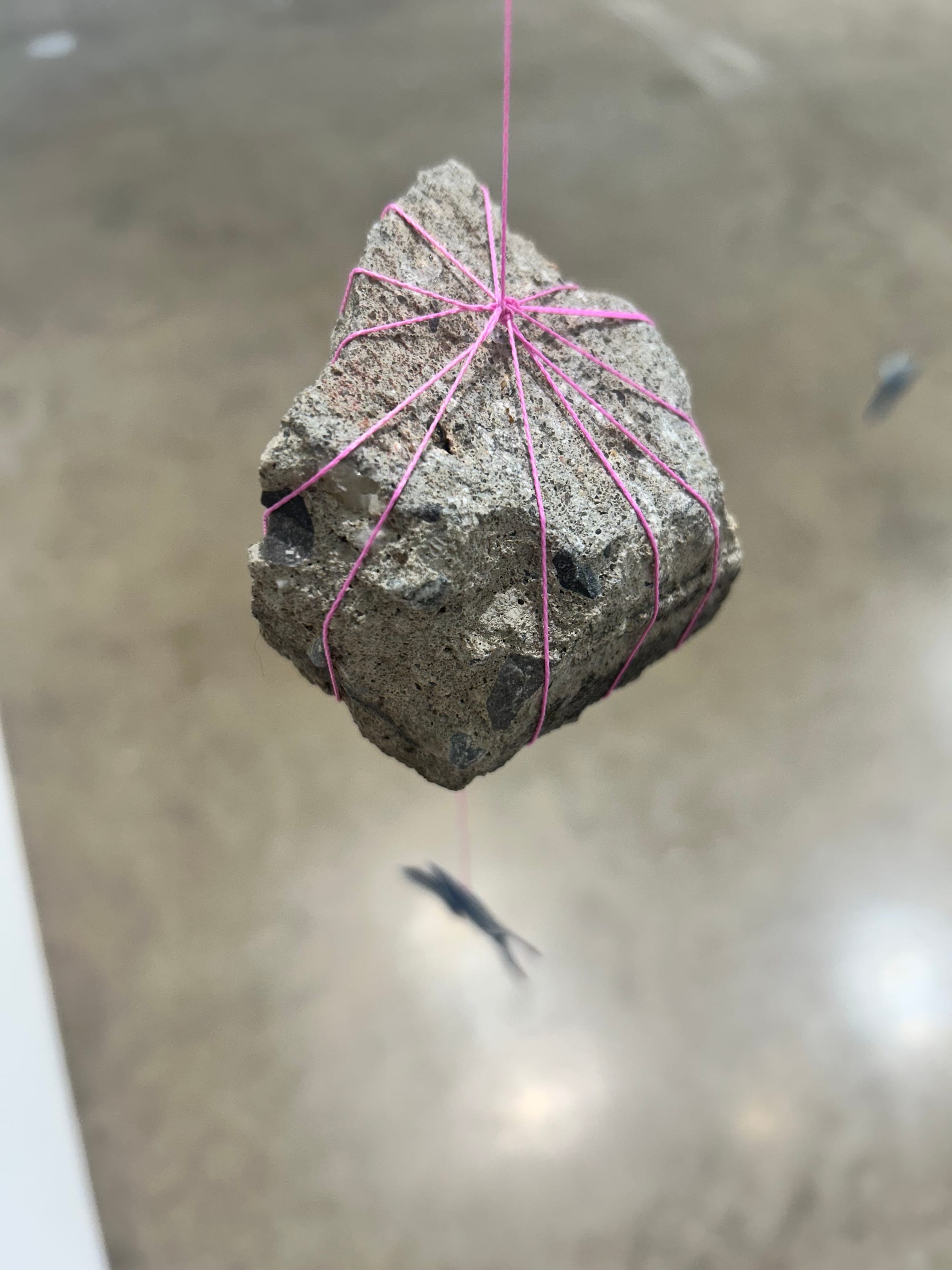
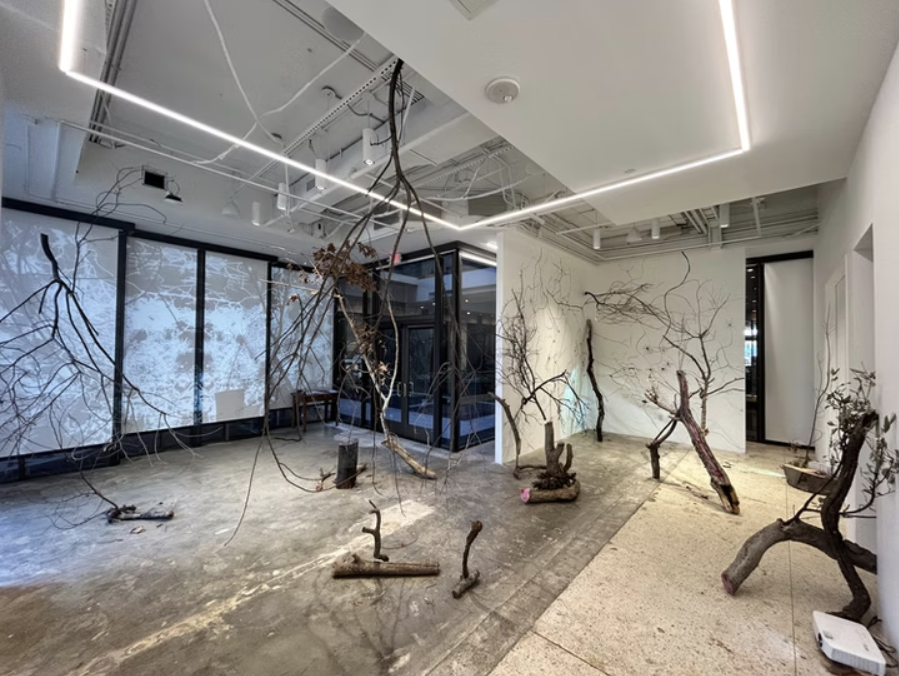
In another body of work, I collected fragmented branches from Dallas streets. Trash in alleyways. Abandoned lots and people’s yards (an embarrassing process to say the least).
I suspended these heavy branches and stumps with fishing line from the gallery ceiling i.e. "hanging by a thread." I filled the holes and “wounds” in the wood with printed fabric showing mycelium and neural patterns. The fabric patches became like recovering calluses…. wounds in the process of healing. Or wounds that might remain open. Both are okay.
Metaphors emerged without my planning them: work in progress, mending wounds, precarious existence. The branches were broken but still held a kind of architecture. The wounds weren't something to hide… they were where the new patterns could enter.
–
If I can create space or opportunity for people to embody their relationship to nature in a new way... they may in turn engage with the earth in a more conscious or meaningful way. They might pass this new attunement on to a friend. And the attunement branches and multiplies. Everything is fractal!
—
What does any of this have to do with right now?
The old systems are unraveling. The old stories aren't holding. And I think nature has always known how to navigate this: through ecotones, through porosity, through the slow and invisible work of transformation.
The strongest systems aren't the most sealed. They're the most flexible and permeable while still holding a shape. Coral. Mycelium. Cell membranes. They thrive because they allow flow while maintaining enough structure to not collapse.
It's in this constant flux that I find a quiet hopefulness. Life renews without permission. Evolution happens whether we resist it or not!
The question is whether we can get comfortable in the blurriness of the ecotone…the gray area. Whether we can learn to live in the in-between, not as a problem to solve, but as the most generative place to be!