From progress to presence: shifting our relationship to time by Ida Persson
We have inherited a story that time flows in a straight line. That it moves in one direction, at one speed, toward a future we are told is always better. In this story, time is something to race against. Every moment should be productive, every year an improvement on the last. Before long, the world's mandate to keep up becomes our own.
Linear time and a focus on growth ran my life for a long time. I was a swimmer from the age of 7 to 27. My life was ruled by 1/100 of a second, the difference between first and second place, and in the sport, there was always a next level to reach and something new to improve.
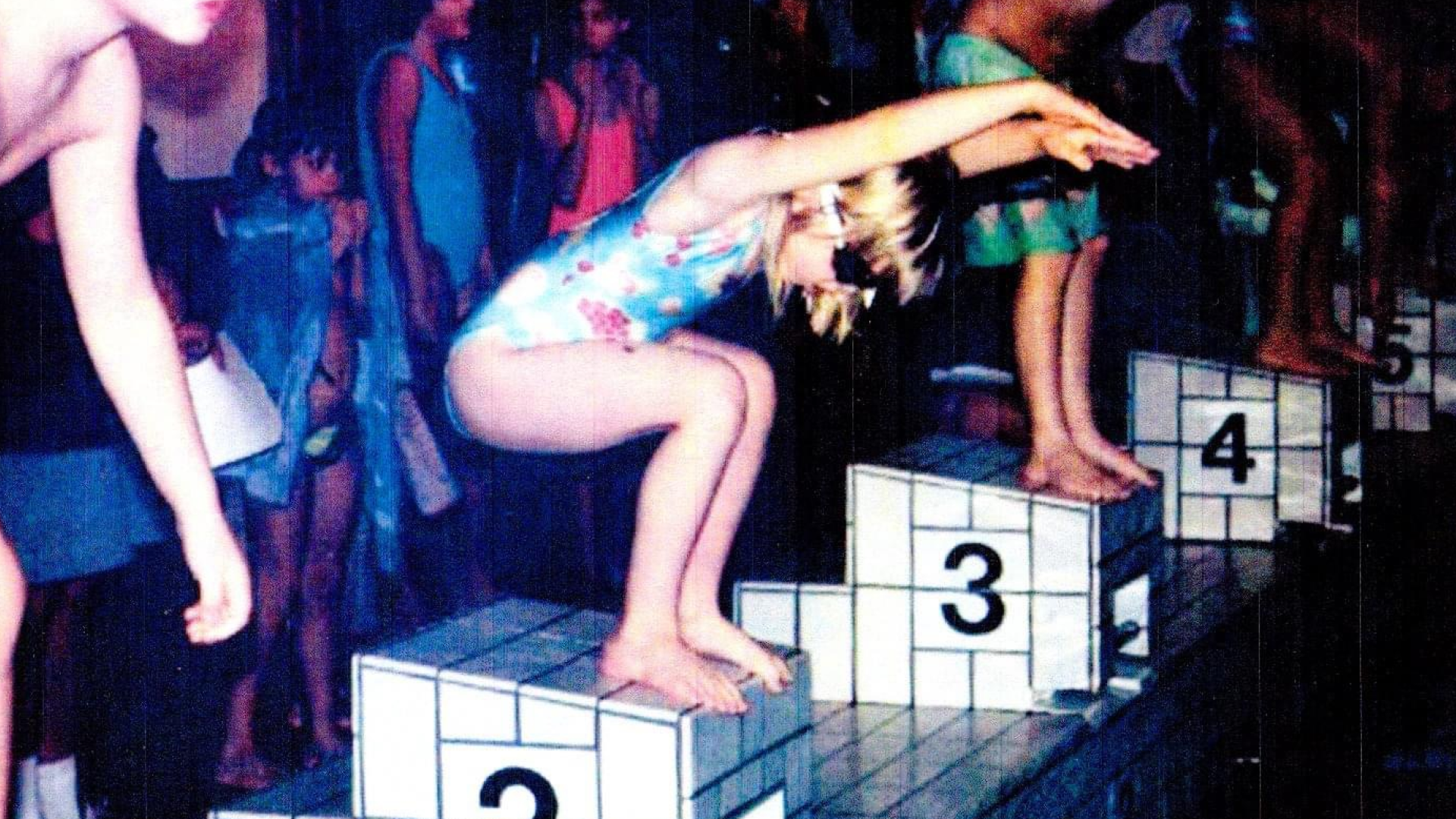
This mentality left me with many medals. It also left me with many scars. By my second year of college, the voice that told me to push for more was overpowered by a pain in my shoulder that would not go away. I had surgery, but the pain didn't stop, and after two years of rehabilitation, I left my sport behind.
Intro the corporate world…
In sport, we are always focused on growth and improvement, and I’ve realized that the professional world isn't so different. We may not be chasing seconds and medals, but rather titles and recognition. We compare ourselves to our peers, and believe in algorithms that tell us that if we stop posting, we stop being relevant. The message is clear: keep up, or be left behind. The content stream moves like a treadmill controlled by someone else—and we just keep running.
As a designer, I’ve pushed myself to keep creating even when I knew that my brain and eyes needed rest after endless hours in front of the screen. I’ve tried to keep up with the pace of the marketing and design world. I’ve pushed myself to prove my worth.
The artificial timelines we’ve inherited force us to keep going and growing even when our bodies, our creative soul, and the planet, tell us they've had enough.
I often look back at swimming and my design career and wonder if there was a gentler, kinder way to achieve progress. If endless growth wasn’t the goal, how would we shift our relationship to ourselves, each other, and the way we interact with the natural world around us?
Designing a different path forward
Shifting away from the current narrative of speed, productivity, and winning at all costs has become a central part of my work as a designer. I want to use design to improve the world around us and the world inside of us, and a lot of that work becomes about unlearning these narratives and writing new ones. A lot of this work of shifting my practice and perspectives is done through my work at DesignShifts.
It’s a community, experimental lab, and learning platform where we research and practice non-extractive design methods for times of systemic transition. Together, we explore design as a force for healing, equity, and collective wellbeing rather than a tool for productivity.
My work is not simply about rethinking design but rather an invitation to pause and ask ourselves what enough looks like and how we can create a world that is less about growing and more about flourishing. It’s about paying attention instead of trying to capture attention. Letting process matter as much as the product. Trusting that presence can be more transformative than productivity.
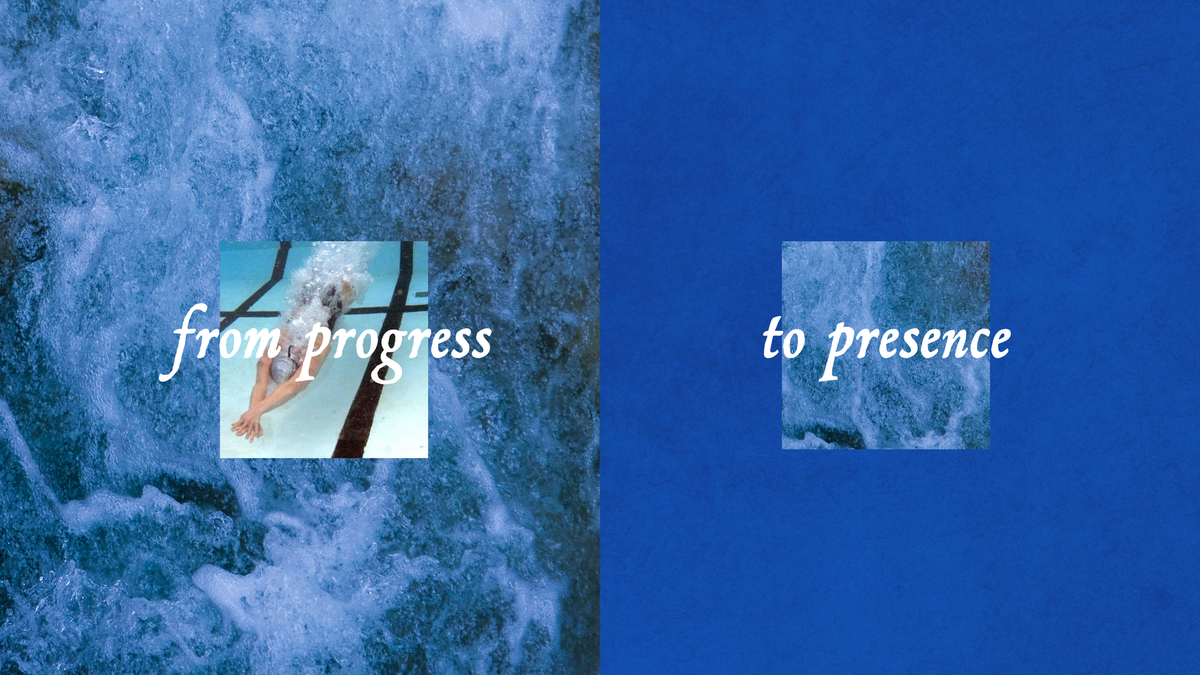
From progress to presence
DesignShifts takes shape through three interconnected practices: research and learning, community, and experimental making, and two weeks ago we hosted our first in-person gathering together with sahibzada mayed and Christine Flanagan.
The shift we explored was how we can move “from line to loops” when it comes to time. Letting go of the linear times and progress and embracing a more fluid, looping relationship to time.
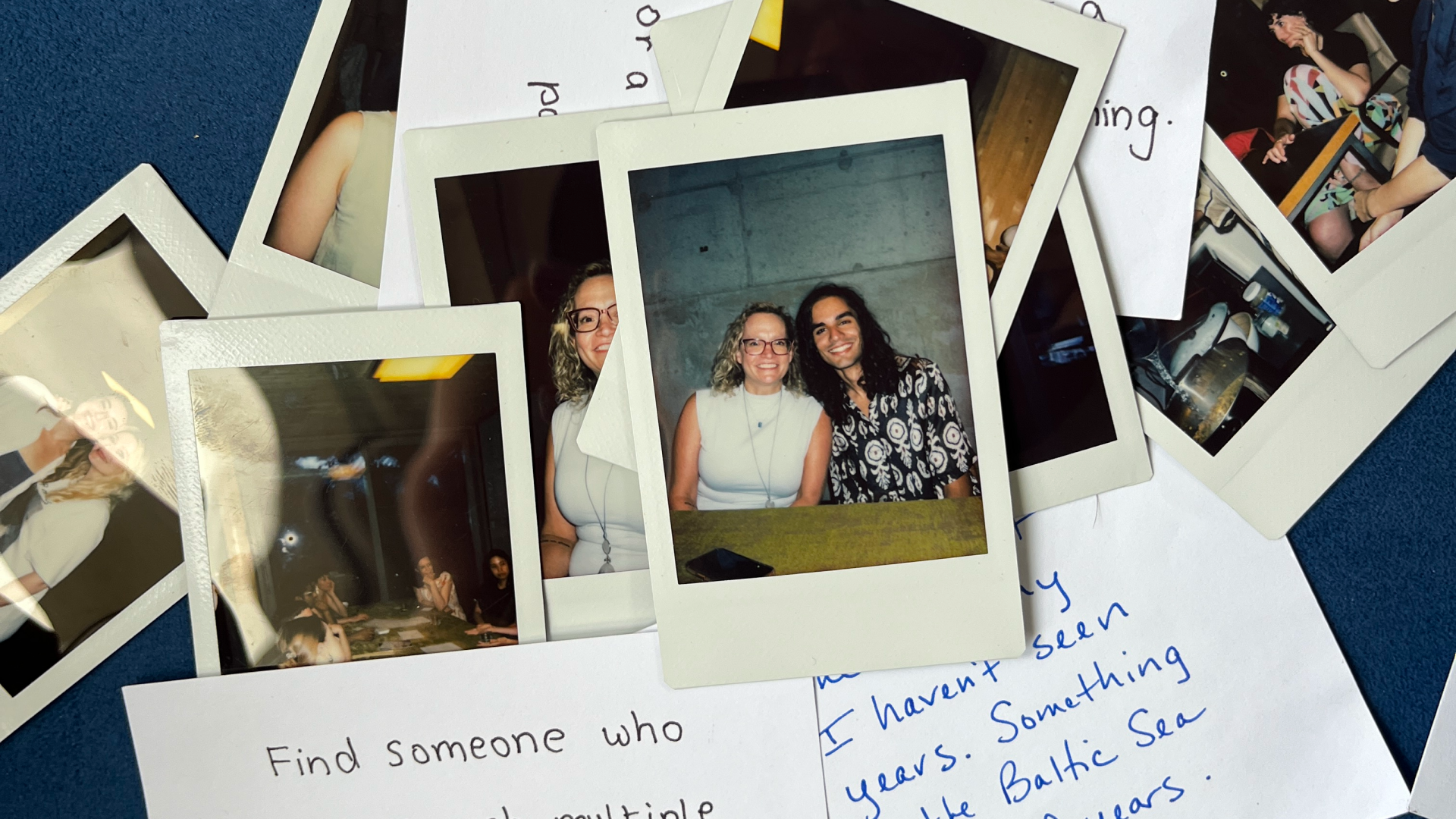
During the session, we explored different dimensions of time: time as experienced through the body, inherited through our lineages, shaped by the rhythms of the living world, and created through our relationships with one another. We reflected on the ways our bodies hold their own sense of timing, the stories of time we carry from those who came before us, the natural cycles that remind us there is a season for everything, and what becomes possible when we stop keeping time alone.
At the end of the session, one participant reflected that time had felt different during the three hours we spent together. They hadn't looked at their watch once. The time had passed quickly, yet it also felt spacious. In a way, beyond time.
This reflection reminds me of what Adrienne Maree brown said about time:
"Real time is slower than social media time, where everything feels urgent. Real time often includes periods of silence, reflection, growth, space, self-forgiveness, processing with loved ones, rest, and responsibility."
The gathering wasn't simply an opportunity to be in “real time” together. It also resulted in a space where we moved from progress to presence. It reminded us that if we want to live more fully and experience aliveness, we must shift away from a productivity-centered mindset towards being present for the experiences and the moments we’re presented with. When we do this, an event and our lives become less about “tangible outcomes” and more about letting the current moment — not the future timelines — guide us.
When we stop asking every moment to prove its value, we begin to see more clearly. And perhaps that's what this moment asks of designers. In a world shaped by climate breakdown, social isolation, and economic instability, our greatest contribution may not be moving faster. It may be learning to be fully present with the complexity that already exists.
Flow of water
I want to end where we started: in the flow of water. Even though so much of my swimming career revolved around timelines, the most important moments in a swimmer's career are timeless. There were moments when time seemed to disappear entirely. Scientists describe these as flow states: moments of complete absorption where the body knows what to do and the mind stops keeping score. You're no longer thinking about your time, your competitors, or whether you're prepared enough. You're simply swimming.
Flow reminds us that time is not only something measured by clocks. It is also something we experience through our relationship with the present. When we let go of what’s next, we can be fully here.
In swimming, the only way to race well is to stop chasing time and experience the race completely. This is also true in life. When we enter into this state, we see that life is not a race against time, but rather an invitation to move from progress to presence.
I want to leave you with three questions as an invitation to enter a flow state together. Not as something to achieve, but as a way to notice the moments when time softens, when we become fully immersed, and when we reconnect with the present.
- When was the last time you lost track of time? What did you do and how did it feel?
- How can you let the flow of the current guide you through this next summer season?
- If your only “job” was to become more present, what would you do?